What does a paint meter measure?
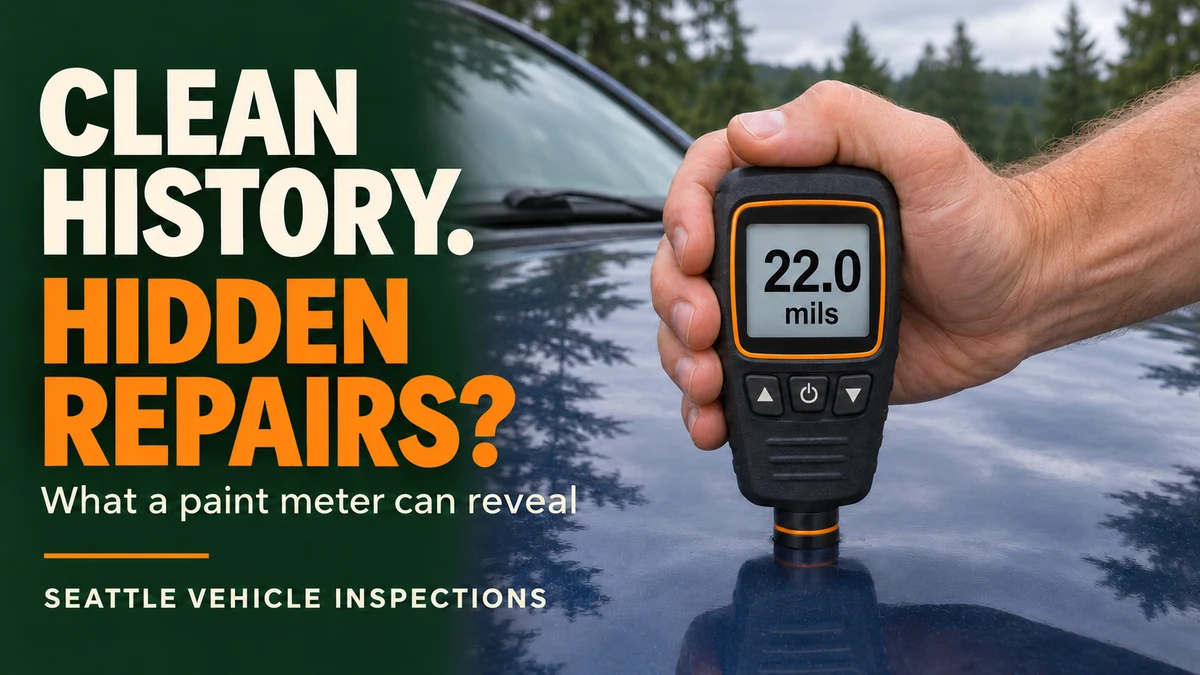
A paint meter measures the thickness of the coating over a metal body panel. The reading is usually shown in mils. One mil is one-thousandth of an inch.
I compare readings around the vehicle, looking for panels or areas that stand out.
What is a normal paint reading?
Many factory finishes measure roughly 4–7 mils, but there is no single correct number for every car. Readings vary by manufacturer, panel, material and finish. DeFelsko’s automotive guidance explains this variation.
The comparison matters more than one number:
- Most panels read 4–6 mils: a fairly consistent pattern.
- One panel reads 12 mils: noticeably thicker and worth a closer look.
- One area reads 22 mils: substantially thicker than the surrounding 4–6-mil panels. Previous refinishing or repair material may explain the difference.
These are examples, not pass-or-fail limits. A higher reading alone cannot tell me what happened or how well a repair was done.
Does thicker paint mean an accident?
Not necessarily.
A panel may have been repainted because of scratches, parking damage, fading or a collision. Some repairs involve only paint. Others involve additional layers or body filler.
The meter helps identify where to look. I also check panel gaps, paint texture, overspray, fasteners and accessible body structure. Those observations help put the readings into context.
Why can a clean history report miss repairs?
A vehicle-history report can only show information available to its provider. It is useful background, but it cannot replace checking the actual vehicle.
The FTC recommends an independent inspection even when a used car has a vehicle-history report. Read the FTC’s used-car buying guidance .
A clean report and a shiny finish are starting points. Neither confirms that every panel still has its original paint.
Can a paint meter find every repair?
No. Similar readings can occur on a repainted vehicle, and an ordinary metal-panel gauge cannot measure plastic bumpers. Gauge capability also matters when checking different panel materials.
That is why I use paint readings alongside the rest of the inspection. They are one useful piece of evidence—not a complete answer by themselves.
What does this mean when you’re buying?
Previous paintwork doesn’t automatically make a car a bad purchase.
What matters is understanding what was repaired, whether there are signs of a larger problem, and whether the vehicle’s condition matches what you were told.
My job is to show you what I find in plain language, with photos and readings you can review before deciding.
Know more before you buy
Seattle Vehicle Inspections comes to the seller’s location. I inspect the vehicle, document the findings and walk you through the report.
Based in the Seattle area, covering most of Western Washington: Olympia to Bellingham, the whole Olympic Peninsula, and east over the Cascades to Wenatchee.
Book an inspection, or call or text 206-843-7600.
See a sample inspection report and read the Subaru inspection case study.